
No mains power reaching the compressor. Tripped breaker, blown fuse, or disconnected supply. The most basic cause -- and the most embarrassing to miss.
What you'll see
If the controller display is on and showing a fault message, the problem isn't 'no power' -- it's a specific fault condition. Read the fault code. See: Emergency Stop, Motor Overload, Safety Interlock, Phase Sequence Error.
Or: the controller display powers on but the motor doesn't engage -- in that case the control power is working, and thus the mian power is OK, but the main power circuit powering the motor is broken.
Could also be:
Follow the steps below to diagnose the problem.
Easiest is to just measure the voltage at key points and work your way back to the main isolator switch / incoming power supply (or start there)
How to diagnose
-
Check the main isolator / disconnect switch
Is it turned on? Sounds obvious, but it happens. Someone may have turned it off for maintenance or an electrician may have disconnected power. Check the position of the handle -- on most machines it's a rotary switch on the side of the electrical cabinet.
While here, check the fuses/breaker. Make sure we have voltage below all the isolator switches/breakers/fuses.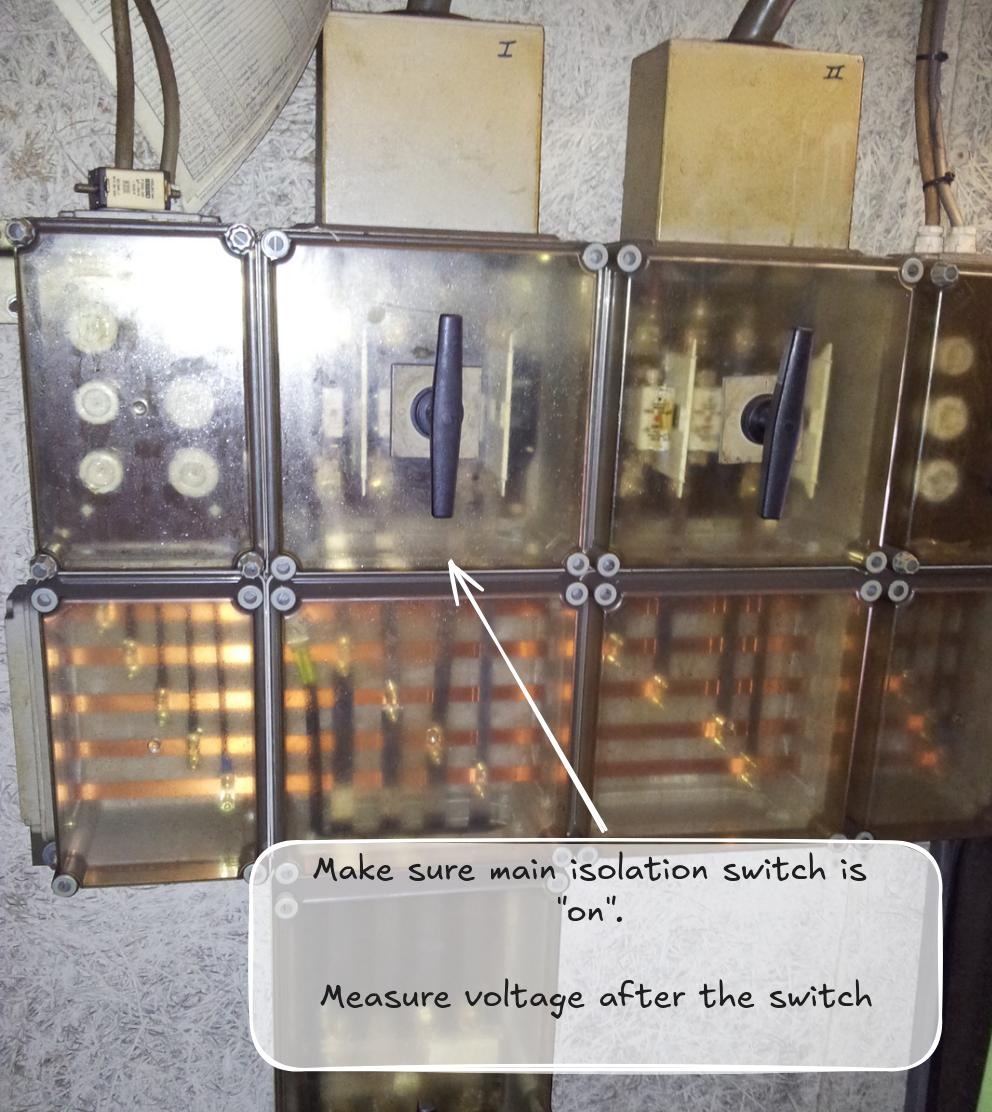 Result: Isolator off = turn it on. Isolator on = check downstream.
 -
Check incoming voltage at compressor
Check the incoming power at the compressor. Is there any voltage? If yes, is it within normal range? You should see your rated voltage on all three phases (e.g., 400V between phases).
If there is no voltage here, follow the cable upstream until you reach the main switch / distribution panel. See step 1 above here.
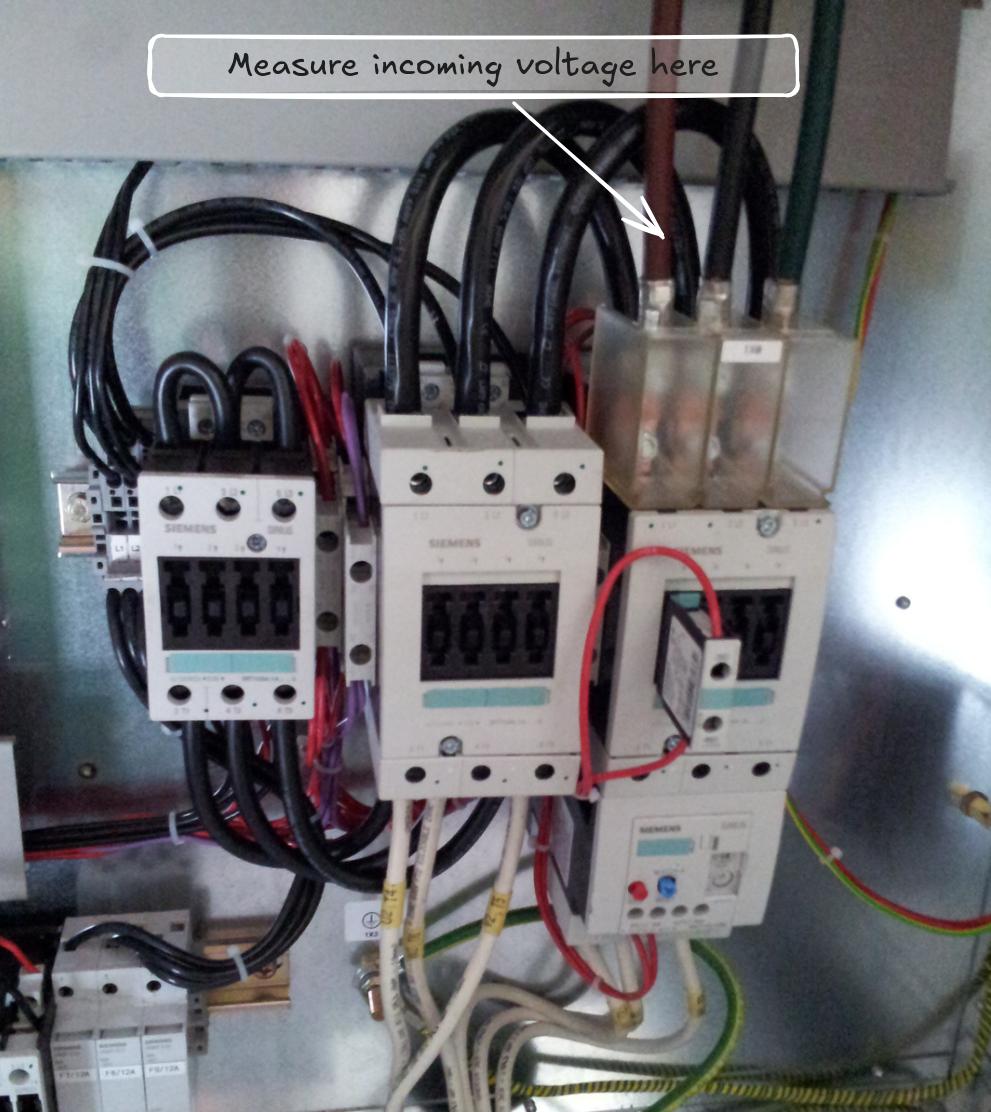 Result: Missing phase or zero voltage = problem is in the building supply, not the compressor.
 -
Check control circuit fuses
Most compressors have separate fuses for the control circuit (controller, display, solenoids) and the main power circuit (motor).
Power to the control panel is usually 12v or 24v but could also be 230v or 130v in other parts of the world.
Follow the path from incoming power, through the fuses, through the transformer, towards the control panel. Trace where there's power and where not anymore.
In some cases, the transformer can burn out, in which case you'd measure mains voltage at the input side but zero voltage at the output side.
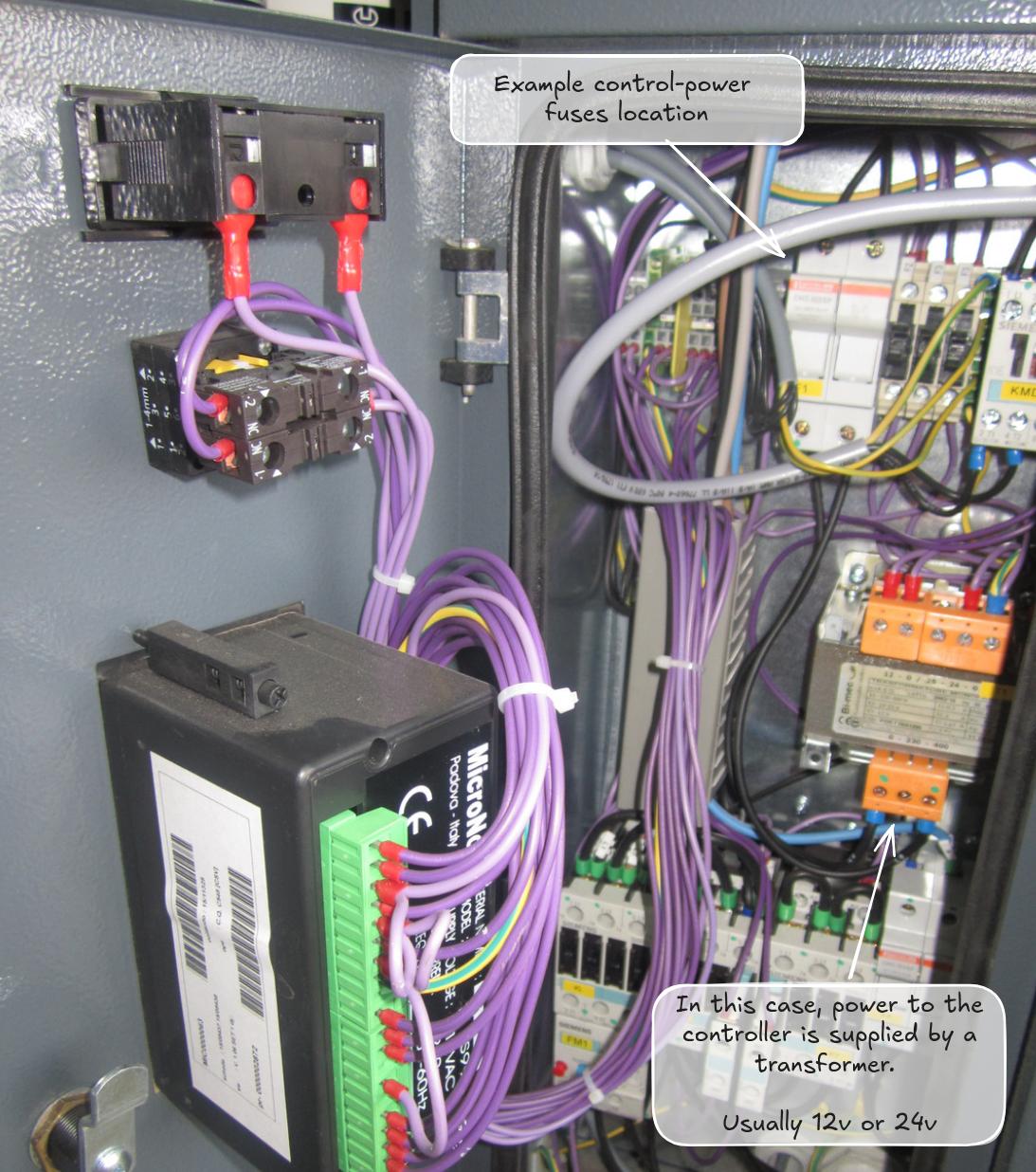 Result: Blown fuse = replace and investigate why it blew.
How to fix it
The exact fix depends on where the actual problem lies, obviously.
If main isolator switch was turned off, find out WHY this was done in order to prevent accidents or accidental damage.
If fuses have blown / breaker tripped inside the air compressor control cabinet, reset them. If they immediately trip again, continue troubleshooting, but it's not the current problem "no power supply".
Don't just keep resetting a breaker that trips repeatedly. Each trip is a short circuit event that can damage wiring and components. Find the fault first. Also: check voltage DURING running, not just at standstill. A bad connection or undersized cable can deliver correct voltage at rest but drop significantly under the motor's starting current.
Multimeter (essential). Replacement fuses (keep spares on hand -- same rating!). No special compressor parts unless a component caused the breaker trip.
You'll be working in the electrical cabinet. Lock out/tag out at the main isolator before opening panels. If you need to measure live voltages, use properly rated tools and PPE. Electrical faults can involve arc flash hazards on larger machines.